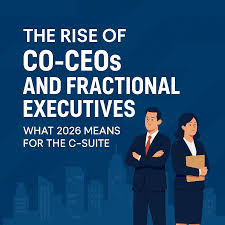
Gig Economy 2.0: The Rise of the 'Fractional Executive' in 2026
👔 The CEO is a Freelancer
Ten years ago, the term "Gig Economy" conjured images of Uber drivers, food delivery riders, and TaskRabbits. It was synonymous with low-wage, high-volume, precarious labor.
In 2026, the Gig Economy has moved to the corner office.
Welcome to the era of the Fractional Executive. According to new data from LinkedIn and the Bureau of Labor Statistics, 15% of all C-Suite roles (CEO, CFO, CMO, CTO) in Series A and B startups are now held by part-time, fractional leaders. The single-employer career is dying; the "Portfolio Career" is born.
💼 How It Works: The Time-Share Executive
Imagine you are a startup founder. You have just raised $10 million in Series A funding. You need financial discipline immediately, so you need a Chief Financial Officer (CFO).
* The Old Way: You hire a full-time CFO. A veteran with 20 years of experience commands a salary of $250,000 + 40% bonus + significant equity. That burns a huge hole in your runway, and frankly, you don't have enough work to keep them busy 40 hours a week yet.
* The 2026 Way: You hire a "Fractional CFO." She is a veteran ex-Goldman Sachs banker. You pay her $8,000 per month. She works for you one day a week (Tuesday). She handles the board meeting, the audit, and the big strategy.
The twist? She also works for four other companies on Monday, Wednesday, Thursday, and Friday.
The Math:
* Cost to Startup: $96,000/year (vs $350k+). A massive saving.
* Income for Executive: $8,000 x 5 Clients = $40,000/month or $480,000/year.
It is the rare economic shift where both the buyer and the seller win. The company gets "Rolex talent for Casio prices," and the executive doubles their income.
📈 Why Everyone Is Doing It
🪜 Ladder vs. Lattice: The Death of Loyalty
The concept of the "Company Man"—finding a firm at 22 and retiring at 65—is officially dead. In 2026, your loyalty is to your Personal Brand and your Skill Stack.
LinkedIn is your resume. Your network is your net worth. The career path is no longer a Ladder (climbing up one structure); it is a Lattice (moving sideways, diagonally, and holding multiple nodes at once).
> "I don't have a boss. I have clients," says Sarah Jenkins, a Fractional CMO based in London. "I will never go back to begging for vacation days. If I want a week off, I just tell my clients I am unavailable."
⚙️ The Technology Enabler: DAOs and Smart Contracts
How do you manage 5 jobs? New AI tools have emerged to manage the chaos.
* Calendar AI: Automatically juggles meetings across 5 different company domains.
* Context Switching: Tools like "Recall" record every meeting and summarize "Where we left off" so the executive can switch from a Fintech brain to a Healthcare brain in seconds.
* Payment: Many fractionals are now paid via Smart Contracts on the blockchain, ensuring they get paid instantly upon delivering a milestone, removing the need for invoicing departments.
🏁 Conclusion: The End of the 40-Hour Week
Gig Economy 2.0 is rewriting the social contract of work. The 40-hour week at one desk is a relic of the industrial age—a factory model applied to knowledge work.
In the information age, you are paid for your output, not your hours. And for the best and brightest, selling your time to just one bidder is simply bad business.
❓ Frequently Asked Questions (FAQ)
Is this just consulting?
Yes and no. Consultants usually advise from the outside and leave. Fractional Execs have a company email address (cfo@yourcompany.com), manage teams, have voting rights, and make decisions. They are *embedded* inside the organization, just for less time. They have "skin in the game" (often equity).Can anyone do this?
No. It is a game for experts. You generally need 15+ years of experience to be valuable enough to make an impact in just one day a week. Junior employees still need full-time mentorship and presence to learn the ropes.Do they get benefits?
No. They are independent contractors (1099 in the US). They pay for their own healthcare, insurance, and taxes. This relieves a huge administrative burden from the hiring companies, further incentivizing the model.About the Author

Elena Corves
Dr. Elena Corves is a former Wall Street quantitative analyst who now leads the Business & Economy desk at Global Brief. She is a renowned voice on the 'End of Cash' transition, Central Bank Digital Currencies (CBDCs), and the emerging fractional gig economy. Elena's writing cuts through the jargon of high finance to reveal the human impact of macroeconomic trends. She is particularly focused on the rise of fintech in developing markets and the shifting dynamics of global trade routes. She holds a PhD in Economics from the London School of Economics.
Global Brief Intel
Source:
Continue Reading

Africa Fintech Boom: The Wakanda Effect in 2026
Nigeria's Flutterwave becomes the continent's first 'Decacorn' ($10B+ valuation) after IPO.

Amazon 'Prime Air' Goes Global: Drone Delivery Launches in 50 Cities
Amazon has officially expanded its Prime Air drone delivery service to 50 major metropolitan areas worldwide, including London, Tokyo, and New York.

The $25,000 EV War: How Tesla and BYD Are Flooding the Market in 2026
Tesla officially launches the highly anticipated 'Model 2' (Code Name: Redwood) at a base price of $24,990, finally reaching price parity with the Toyota Corolla.