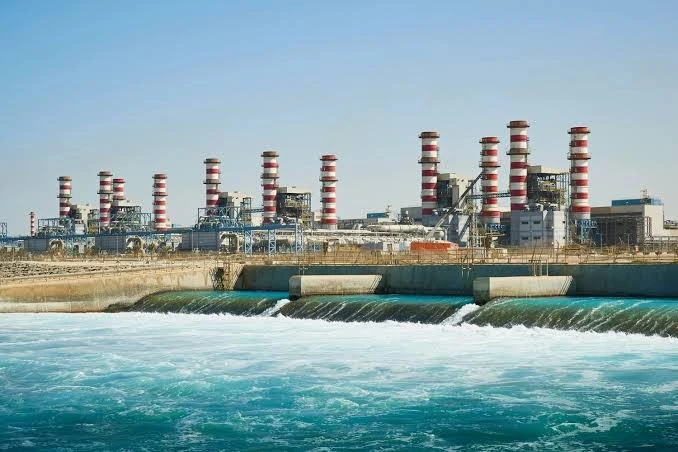
The Water Wars: Desalination Tech vs The Drought of 2026
💧 Blue Gold: The Commodity of the Century
Oil was the undisputed commodity king of the 20th century. Data claimed the throne in the early 21st.
But in 2026, the most valuable, contentious, and critical resource on Earth is plain, boring H2O.
The headlines are grim and relentless: The Colorado River has been reduced to a muddy trickle before it even reaches the Mexican border. The Danube is walkable in Budapest. Cape Town is continuously fighting off "Day Zero." But in the gleaming research labs of San Diego, Dubai, and Tel Aviv, a quiet miracle is happening. Humanity is finally learning how to drink the ocean efficiently.
🧂 The Salt Problem: Why We Can't Just Drink the Ocean
We live on a blue planet, covered 70% by water. But 97% of that water is saline—it kills us if we drink it and salts the earth if we pour it on crops. Historically, Desalination (removing salt from seawater) was the energy equivalent of burning dollar bills.
* Thermal Distillation: The old way. Boiling water to capture steam. It requires massive amounts of fossil fuels.
* Reverse Osmosis (RO): The 2000s way. Pushing water through thick polymer filters at insane pressures (80+ bar). It is expensive, energy-intensive, and the filters clog easily with biological matter.
🧬 The 2026 Breakthrough: The Graphene Sieve
This year, the first commercial-scale Graphene-membrane plants went online in Dubai, Singapore, and San Diego. This is the technological disruption experts have been waiting for since the material was isolated in 2004.
* The Tech: A filter made of a single atomic layer of carbon (Graphene). The holes in the lattice are engineered to be exactly the size of a water molecule (0.27 nanometers), but too small for a salt ion.
* The Physics: Because the membrane is so thin (one atom thick), there is almost no friction. Water flows through it like a ghost through a wall.
The Result:
* Energy: A 50% reduction in electricity usage compared to 2020 standards.
* Cost: The price has dropped to $0.30 per cubic meter. For the first time in history, it is cheaper to desalinate ocean water than to pump fresh water from distant drying reservoirs.
⚔️ The Geopolitics of Thirst: New Alliances
This technology is redrawing the geopolitical map.
* The Winners: Nations with coastlines and massive access to renewable energy (solar/wind). Saudi Arabia, Australia, Chile, and California are becoming "Water Superpowers."
* The Losers: Landlocked nations without energy resources. They are dependent on their neighbors' pipes.
We are starting to see a new type of trade deal: "Energy for Water."
📈 The Business of Water: Evaluating Stocks
Wall Street has noticed. "Water Indices" are outperforming tech stocks in Q2 2026.
* Infrastructure Giants: Companies like Veolia (France) and IDE Technologies (Israel) are building the plants.
* Tech Providers: The manufacturers of the Graphene membranes are the new "Nvidia" of the sector.
* Real Estate: Property values in previously "doom-scrolled" areas like Phoenix, Arizona, have stabilized purely on the promise of the new pipeline projects bringing desalinated water from the Gulf of California (Mexico).
> "There is no lack of water on Earth. There is only a lack of energy to clean it," says Dr. Peter Gleick, a world-renowned hydro-climatologist. "With boundless fusion or cheap solar power, the water crisis stops being an existential threat and becomes a mere plumbing problem."
🏁 Conclusion
The Water Crisis solutions of 2026 prove that scarcity is the mother of invention. We are not running out of water; we are just upgrading our plumbing on a planetary scale. The ocean is the ultimate reservoir, and we have finally found the key to unlock it without bankrupting the planet.
❓ Frequently Asked Questions (FAQ)
Does desalination kill fish?
Historically, yes. The massive intake pipes sucked in fish eggs and larvae, and the super-salty "brine" pumped back into the ocean created toxic "dead zones" on the seafloor.However, new 2026 international regulations mandate strict solutions:
1. Subsurface Intakes: Drawing water from *under* the sandy seabed, using the sand as a natural pre-filter (no fish sucked in).
2. Brine Mixing: Mixing the salty waste with cooling water from power plants to dilute it before releasing it back into the ocean currents.
Can we tow icebergs from Antarctica?
It is a concept that refuses to die, often proposed by billionaires. But the math doesn't work. Currently, Graphene Desalination is 4x cheaper and 100x more reliable than towing an iceberg across the equator, which loses 40% of its mass to melting in transit.What can I do personally?
While technology saves the supply, demand is still the issue. The biggest impact you can have is to **reduce meat consumption**. Agriculture uses 70% of the world's freshwater, and the vast majority of that goes to growing feed (alfalfa/soy) for cows. A single hamburger takes 600 gallons of water to produce—enough to shower for two months.About the Author

Marcus Thorne
Marcus Thorne serves as the Chief Political Analyst for Global Brief, where he connects historical context with modern legislative shifts. With a Master's degree in Geopolitics from Georgetown University and two decades of field reporting from Brussels to Beijing, Marcus offers a nuanced perspective on the laws shaping our future. His reporting focuses on the intersection of climate policy, digital sovereignty, and the new multipolar world order. Known for his 'Macro-Lens' approach, he helps readers understand not just what is happening, but why it matters for the next decade.
Global Brief Intel
Source:
Continue Reading

The New Suez: Arctic Trade Route Opens Year-Round, Sparking Global Power Scramble
The Northern Sea Route stays ice-free year-round for the first time, cutting Asia-Europe shipping times by 50%.
The Ice Melts, The Borders Freeze: Nations Sign Revised 2026 Arctic Treaty
In a landmark summit in Reykjavik, the eight Arctic Council nations have signed a revised treaty banning all commercial oil drilling until 2050.
Cold War Ends on Ice: The New Arctic Treaty Signed in Reykjavik
The 'Reykjavik Accord' establishes the Arctic as a Demilitarized Zone (DMZ) for 50 years.