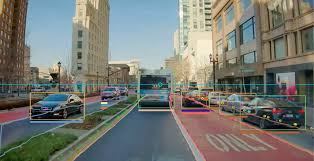
Smart Cities 2026: When the Streets Watch You
🚦 The City That Thinks
Imagine driving to work—or rather, being driven by your autonomous vehicle. You glide through the city without once hitting a red light. As you pass, the street lamps dim behind you to conserve energy, only brightening again when another human approaches. Your garbage bin signaled the waste management fleet an hour ago that it was full, and a truck is already on its way. The air quality sensors detected a spike in pollen, automatically adjusting the HVAC systems in nearby buildings.
This is not a scene from a utopian sci-fi movie. This is the Smart City of 2026.
From Singapore to Barcelona, and most ambitiously in Saudi Arabia’s NEOM, the urban landscape has been transformed into a "living organism." It is a miracle of efficiency, sustainability, and convenience. But beneath the polished surface of efficiency lies a complex web of sensors, cameras, and algorithms that track every movement, every transaction, and every interaction.
It is a utopia of convenience, but it is also a digital Panopticon.
🏙️ The Living Organism: How It Works
Cities are no longer just concrete and steel; they are silicon and code. The integration of 5G, IoT (Internet of Things), and ultra-fast Edge Computing has given the city a nervous system.
The Quantifiable Wins:
* Energy: Smart grids and adaptive lighting have reduced energy consumption by an average of 30%.
* Safety: Gunshot detection sensors (like ShotSpotter 2.0) triangulate the sound of gunfire and alert police within seconds. Drones are often on the scene before the shooter has even fled.
👁️ The Trade-Off: Permissionless Surveillance
To optimize the city, the city must *know* the city. And since the city is made of people, the city must know *you*.
In 2026, anonymity is a relic. You are a data point.
* Gait Recognition: Facial recognition was just the start. Advanced cameras can now identify you by your "gait signature"—the unique way you walk—from 50 meters away, even if you are wearing a mask and sunglasses.
* Predictive Policing: This is the most controversial frontier. Algorithms like "CrimeCast" analyze historical data to deploy police resources to neighborhoods *before* a crime occurs. While efficient, legal scholars and civil rights activists argue this reinforces systemic bias, creating feedback loops that over-police minority communities while ignoring white-collar crime zones.
> "You are never alone in a Smart City," warns Dr. Elena Kogan, a privacy advocate. "The walls have ears, the streetlights have eyes, and the sidewalk knows your weight. We have traded privacy for convenience, and there are no refunds."
🇸🇦 The Line: A Test Case for Humanity
The most extreme example of this new reality is NEOM's 'The Line'.
In 2026, the first functional residential module of this mirror-clad linear city in the Saudi desert is fully operational. It is a car-free, carbon-neutral marvel where all services are within a 5-minute walk.
But it is also the ultimate experiment in engineered living. Residents don't just pay rent; they essentially "subscribe" to the city. Every aspect of their life—from health metrics to consumption habits—is monitored to optimize the city's performance. It is efficient governance, but detractors call it "Algorithmic Authoritarianism."
⚔️ The Security Nightmare
With great connectivity comes great vulnerability. The dark side of the Smart City is the risk of a catastrophic hack.
In the cybersecurity world, this is known as the expanded "attack surface."
* Scenario Red: If a hacker breaches the Central AI, they could gridlock traffic, shut off water supplies, or disable hospital power grids.
* Response: Cyber-defense budgets for major cities now rival their physical police budgets. We are seeing the rise of "Digital Civil Defense" squads—white-hat hackers employed by the city to patrol the digital perimeter 24/7.
🏁 Conclusion: Who Holds the Switch?
The Smart City surveillance ethics debate is the defining civic issue of our time. We are building systems that work perfectly, eliminating the friction of daily life. But we must ask: Who controls the algorithm? Who decides what behavior is "abnormal" or "inefficient"?
As we walk into this convenient future, we must ensure that we remain citizens, not just subjects of the code.
❓ Frequently Asked Questions (FAQ)
Can I opt out of a Smart City?
Practically, no. Short of moving to a rural "off-grid" dead zone, engaging with the smart infrastructure is mandatory for participation in modern economic life. Some cities are experimenting with "Data Trusts," allowing citizens to see and vote on how their data is used.Do these cities actually save money?
In the long run, yes. The savings from predictive maintenance (fixing a pipe before it bursts) and energy efficiency save billions. However, the upfront capital cost (CapEx) is staggering, leading many cities to turn to "Public-Private Partnerships" where tech giants own the infrastructure—and the data.Is this happening in older cities?
Yes. London, New York, and Tokyo are retrofitting sensors onto Victorian and mid-century infrastructure. It is messier and less integrated than NEOM, but the "Smart Layer" is being applied everywhere.About the Author

Sarah Vance
Sarah Vance is a former Systems Architect turned senior technology journalist, bringing over 15 years of industry experience to Global Brief. Based in San Francisco, she specializes in decoding the post-silicon era, covering breakthrough developments in quantum computing, neural interfaces, and the ethical implications of Artificial General Intelligence (AGI). Her work has been cited by major tech think tanks, and she is a frequent speaker on the 'Human-in-the-Loop' philosophy. When not writing, Sarah is an amateur astronomer and an advocate for open-source AI safety protocols.
Global Brief Intel
Source:
Continue Reading

SpaceX Starship 'Odyssey' Departs for Mars: A New Era for Humanity Begins
The first civilian colony ship 'Odyssey' has successfully launched from Kennedy Space Center.

6G Networks in 2026: The Terahertz Revolution Changing Everything
6G trials in 2026 demonstrate speeds of 1 Terabit per second (100x faster than 5G).

The Loneliness Epidemic: Why 1 in 3 People Have an AI 'Partner' in 2026
A staggering 35% of adults under 30 now report having a 'significant emotional connection' with an AI entity, driven by advanced voice-mode capabilities.