The Great Green Wall: Africa's 8,000km Miracle in 2026
🌳 Holding Back the Sand: The Miracle in the Sahel
For decades, the story of climate change in the Global South has been a narrative of defeat. Melting glaciers. Burning rainforests. Rising seas. Advancing deserts. It is a story of loss.
But here, in the Sahel region of Africa—the arid belt sitting just below the Sahara Desert—humanity is finally winning a battle.
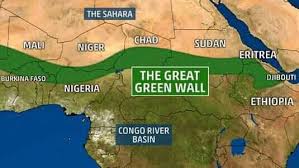
April 2026 marks a historic key milestone for the Great Green Wall (GGW) initiative: The project has officially passed the 70% completion mark. It is no longer just a hopeful PowerPoint plan on a United Nations website; it is an 8,000km line of vibrant green visible from the International Space Station, stretching from Senegal in the West to Djibouti in the East.
It is the largest living structure on Earth, 3 times the size of the Great Barrier Reef.
🌍 The Mission: Why Build a Wall of Trees?
The Sahara is a moving beast. For the last century, significantly driven by climate change and overgrazing, the desert has been expanding southward, swallowing arable land at a rate of 2km per year. It dries up wells, kills livestock, and forces millions of young farmers to flee their homes, creating the phenomenon of "Climate Refugees."
The goal of the Wall was audacious: Plant billions of drought-resistant acacia trees and vegetation to halt this march.
The Science of Regreening
1. **Stop Erosion**: The roots of the trees hold the loose soil in place, preventing dust storms from stripping the topsoil. 2. **Restore the Water Table**: Without trees, rain hits the hard baked earth and evaporates instantly. Tree roots create channels for rain to sink deep into the ground, refilling ancient aquifers. 3. **Cool the Air**: Through transpiration (trees release water vapor), the local micro-climate inside the Wall is now **3°C cooler** than the surrounding desert.🚀 Progress Report 2026: The Numbers
The 2026 audit by the African Union reveals staggering success metrics:
* Restored Land: 100 Million Hectares (an area larger than France).
* Jobs Created: 12 Million direct green jobs. This is not charity; it is employment. People are paid to plant, tap trees for gum, guard the saplings from goats, and harvest the produce.
* Carbon Sequestered: 250 million tons of $CO_2$ sucked out of the atmosphere.
> "We used to look at the sky and pray for rain. Now we look at the trees and wait," says Ibrahim Moussa, a farmer in Southern Niger. "The rain comes where the trees are. The birds have returned. The silence is gone."
🚁 The Tech Upgrade: Drone Reforestation
In the early days (2007-2020), planting was done by hand—slow, backbreaking work. In 2026, the heavy lifting is done by Seed-Firing Drones.
Tech startups from Nigeria (like *AirSeed Africa*) and Kenya have deployed fleets of autonomous drones.
* How it works: The drones scan the terrain using Lidar to find "microsites" where water naturally collects. They then fire a biodegradable pod containing a seed and nutrients into the soil at 300km/h.
* The Scale: A single drone pilot can plant 20,000 trees per day. Hand planting does 400. This 50x speed increase helped the project catch up to its ambitious timeline.
💰 The Economics of Ecology: Money Grows on Trees
The most brilliant pivot of the project was realizing that you can't just plant a forest; you have to plant an economy. If the trees don't make money, desperate locals will cut them down for firewood. The Wall isn't just nature; it's a huge organic farm.
1. The Gum Arabic Boom
The primary tree planted is the *Acacia Senegal*. It produces **Gum Arabic**, a critical stabilizer ingredient found in everything from Coca-Cola to medical pills and watercolor paints. Export demand is skyrocketing, putting hard cash directly into local pockets.2. The Carbon Credit Market
Global corporations are racing to reach Net Zero. In 2026, the GGW project began selling high-quality **"Regenerative Carbon Credits"** on the blockchain. Unlike cheap credits from protecting an existing forest, these are premium credits for *creating* new carbon sinks. Companies like Apple, Microsoft, and Delta Airlines are buying these credits by the ton, effectively funding the Wall's maintenance budget.🛡️ Security and Stability: The Peace Wall
The Sahel has notoriously been a "Belt of Instability," plagued by terrorism and insurgency (Boko Haram, Al-Qaeda affiliates).
The Green Wall brings economic hope to a region of despair. When young men have jobs, income, and a future on their own land, they are significantly less likely to join extremist groups for a paycheck.
The Green Wall is becoming a Peace Wall. Analyzing conflict data, regions with successful reforestation have seen a 40% drop in localized violence since 2022.
🏁 Conclusion: A Model for the Planet
The Great Green Wall progress of 2026 teaches the world a lesson perfectly timed for our era. We cannot fight nature with concrete seawalls or air conditioners. But if we work *with* nature, utilizing ancient wisdom and modern funding, we can heal the scars we've made.
The desert is finally retreating—not because of a weapon, but because of a seed.
❓ Frequently Asked Questions (FAQ)
Is it literally a wall of trees?
**No.** That was the original naive idea. Today, it is a **mosaic** of productive landscapes. It looks like a checkerboard of forests, grasslands, community gardens, and savanna spanning a belt about 15km wide. It bends and breaks around mountains and cities.Which countries are involved?
The core initiative involves 11 primary nations: Djibouti, Eritrea, Ethiopia, Sudan, Chad, Niger, Nigeria, Mali, Burkina Faso, Mauritania, and Senegal. However, 20 other nations have joined as affiliates to extend the green belt deeply into the continent.How is it watered in the desert?
It isn't irrigated by pumps or hoses (too expensive). The project uses indigenous **"Water Harvesting"** techniques. Farmers dig crescent-shaped holes called **"Half-Moons" (Zai pits)**. When the rare rains fall, these holes capture the water and stop it from running off. The water sits in the hole, slowly seeping down to the roots. It is ancient wisdom meeting modern scale.About the Author

Marcus Thorne
Marcus Thorne serves as the Chief Political Analyst for Global Brief, where he connects historical context with modern legislative shifts. With a Master's degree in Geopolitics from Georgetown University and two decades of field reporting from Brussels to Beijing, Marcus offers a nuanced perspective on the laws shaping our future. His reporting focuses on the intersection of climate policy, digital sovereignty, and the new multipolar world order. Known for his 'Macro-Lens' approach, he helps readers understand not just what is happening, but why it matters for the next decade.
Global Brief Intel
Source:
Continue Reading

The New Suez: Arctic Trade Route Opens Year-Round, Sparking Global Power Scramble
The Northern Sea Route stays ice-free year-round for the first time, cutting Asia-Europe shipping times by 50%.
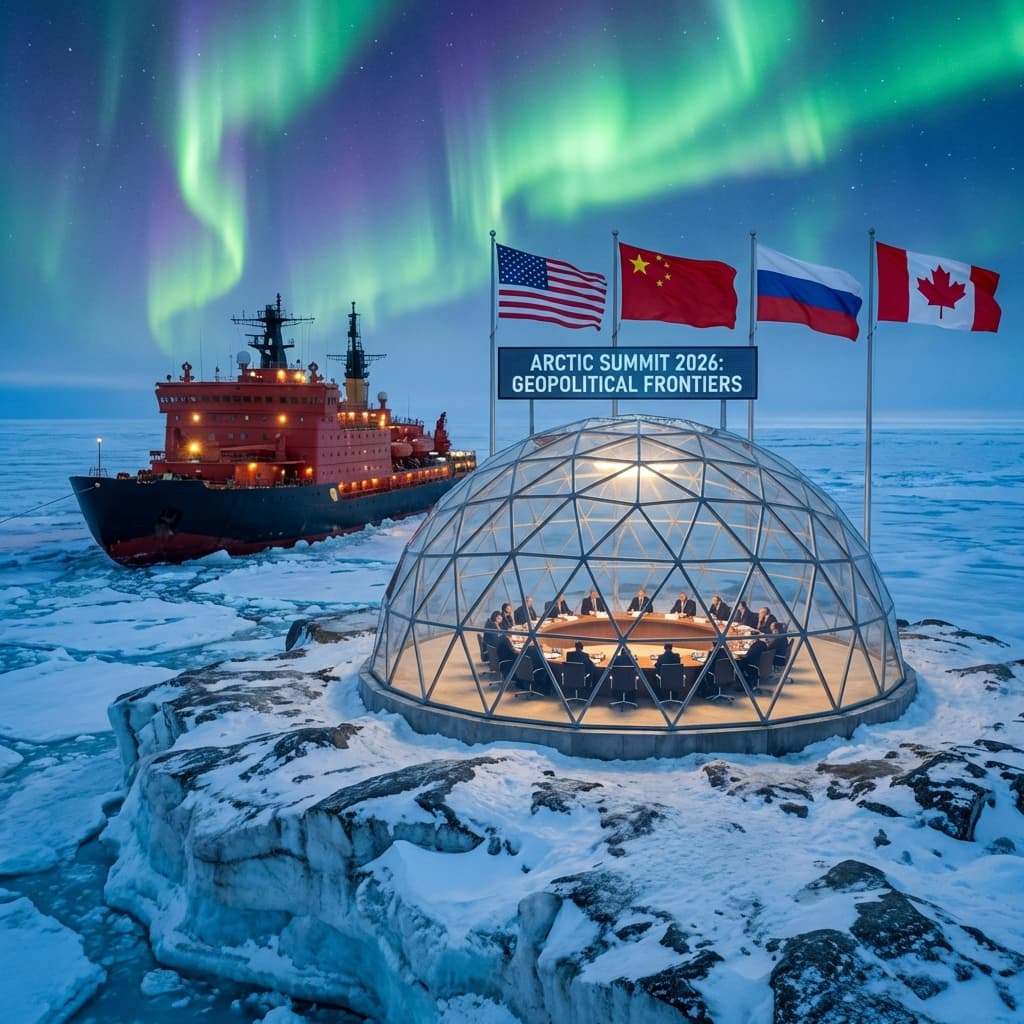
The Ice Melts, The Borders Freeze: Nations Sign Revised 2026 Arctic Treaty
In a landmark summit in Reykjavik, the eight Arctic Council nations have signed a revised treaty banning all commercial oil drilling until 2050.
Cold War Ends on Ice: The New Arctic Treaty Signed in Reykjavik
The 'Reykjavik Accord' establishes the Arctic as a Demilitarized Zone (DMZ) for 50 years.