AI Tutors vs Teachers: The 2026 Education Crisis Explained
🍎 The Apple on the Desk is Digital
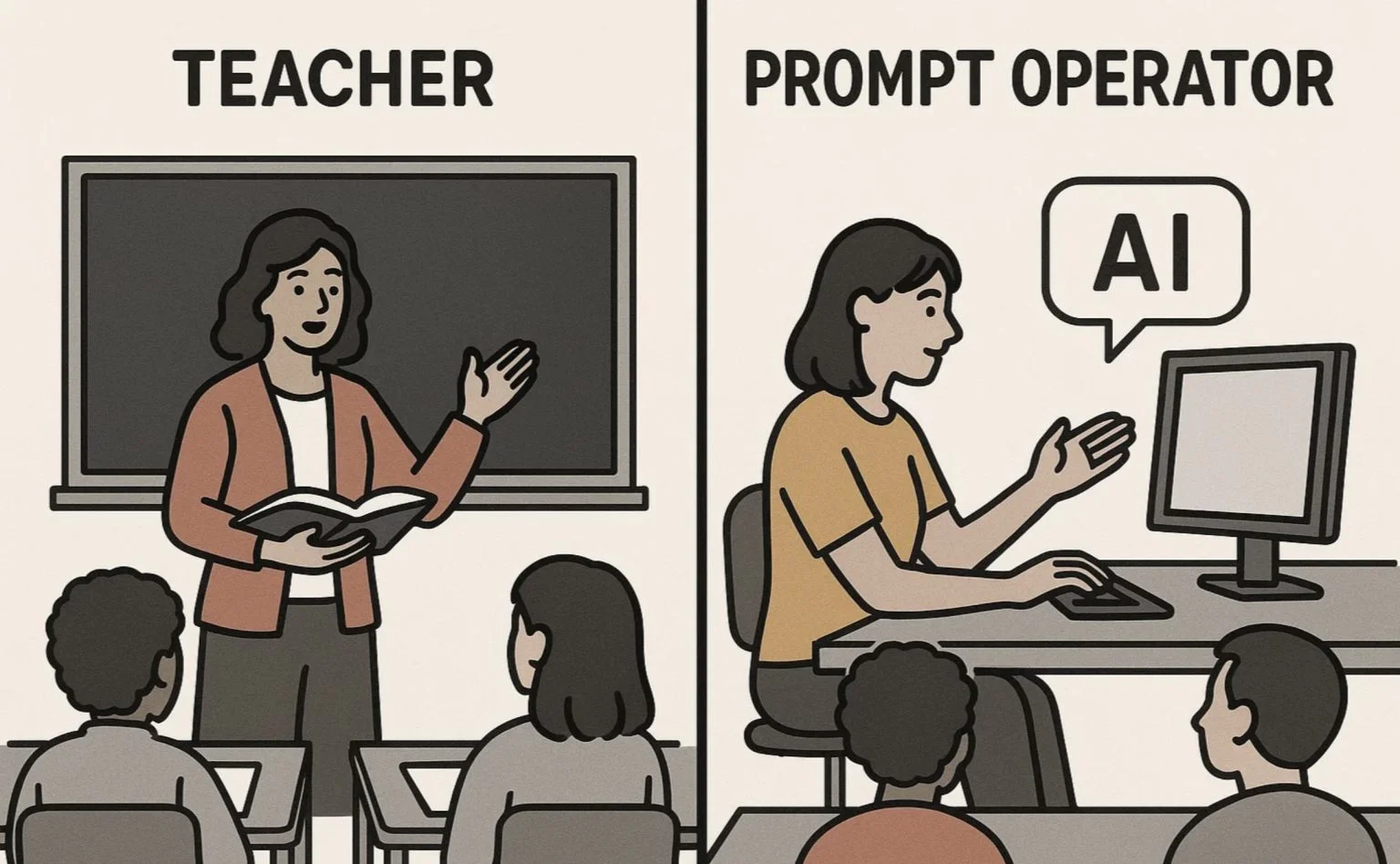
It is a rainy Tuesday morning in September 2026. Inside a 5th-grade classroom in suburban Chicago, it is strangely quiet. There is no teacher lecturing at the chalkboard. There are no students raising their hands or passing notes.
Instead, thirty children are whispering into their headsets.
Alex, 11, is struggling with fractions. He doesn't wait for the teacher to finish helping another student. He simply asks his tablet. Instantly, a friendly voice—calibrated to his preferred learning speed and tone—explains the concept using analogies from Alex's favorite video game, Minecraft. "Think of the block of wood as the whole," the AI says. Alex nods. He gets it.
This is the promise of AI in classrooms. It is efficient. It is personalized. But outside the school gates, parents and teachers are holding picket signs that read: *"Teach Kids, Don't Program Them."*
🤖 The Technology: Super-Tutors for All
The tools powering this shift—Khanmigo 5.0, Duolingo Max, and the new OpenAI Academy—have evolved far beyond the hallucinations of early chatbots. They are:
* Personalized: The AI knows if a student is a visual learner or auditory. It adjusts the curriculum in real-time. If a student is bored, it speeds up. If they are confused, it slows down.
* Patient: An AI tutor never gets frustrated, even if it has to explain long division fifty times in a row. It never has a bad day or a headache.
* Omniscient: It has the sum of human knowledge on tap, fact-checked in real-time against approved curriculums.
The Stat: In nationwide pilot programs, students using AI tutors for just one hour a day advanced 2 grade levels in Math and Reading in a single semester. The data is undeniable: It works.
📉 The Pros: Democratizing Genius
For centuries, education was standardized because it had to be. One teacher cannot customize a lesson for thirty different minds simultaneously.
* The Equalizer: Rich kids always had private tutors ($100/hour). Poor kids had crowded classrooms. AI levels the playing field. For a $10/month subscription (or a state subsidy), every child gets an Oxford-level tutor in their pocket.
* The Achievement Gap: Proponents argue this is the greatest tool for closing the racial and economic achievement gap in history. A kid in rural Alabama now has access to the same quality of instruction as a kid in Silicon Valley.
⚠️ The Cons: The "Social Atrophy"
But if the AI teaches the facts, what is left for the human?
Critcs warn of a massive "Social Atrophy."
* Loneliness: Schools are becoming siloed experiences. Collaboration is dropping. Why ask a peer for help when the AI is smarter and faster? The hidden curriculum of school—learning how to work with others—is being lost.
* Truth Decay: Who programs the history curriculum? If the AI model has a subtle bias, it doesn't just influence one class; it brainwashes an entire generation at scale. The "black box" nature of these algorithms makes auditing them for bias nearly impossible.
* The Teacher Crisis: Teachers report being treated like "babysitters" or "IT support" rather than educators. This loss of agency is fueling a massive retention crisis, with 40% of teachers considering leaving the profession in 2026.
> "We are building smarter computers, but lonelier humans," warns child psychologist Dr. Emily Tran. "School is where you learn to be a person, not just a hard drive."
The Hybrid Model: The Solution?
The most successful schools in 2026 aren't banning AI; they are pivoting. They are adopting the "Flipped Classroom" model on steroids.
* AI does the heavy lifting of knowledge transfer, grading, and routine practice.
* Humans do the mentoring, the ethical debates, the project-based learning, and the emotional support.
In this model, the teacher is no longer the "Sage on the Stage," but the "Guide on the Side."
🏁 Conclusion
The debate on AI in classrooms (pros and cons) is not going away. The efficiency gains are too high to ignore, but the human cost is too high to accept blindly.
2026 is the year we have to decide: Is the purpose of school to download information into brains as efficiently as possible? Or is it to learn how to be a complex, social, messy human being?
❓ Frequently Asked Questions (FAQ)
Will AI replace teachers completely?
Unlikely. The physical safety, motivation, and emotional development of children require human presence. An AI can teach math, but it cannot dry a tear or break up a fight. However, the *role* of the teacher is changing fundamentally.Can students use AI to cheat?
Yes, and they do. The essay is dead. But assessment is changing to match. Instead of writing papers at home, students now do "Oral Exams" with the AI, debating the topic live to prove they understand the material. Cheating is becoming harder, not easier.Which AI tools are best for schools?
Currently, Khan Academy's *Khanmigo* (for STEM) and Microsoft's *Education Co-Pilot* (for integration with Word/Teams) are the market leaders in K-12 integration, due to their robust safety controls.About the Author
Sarah Vance
Sarah Vance is a former Systems Architect turned senior technology journalist, bringing over 15 years of industry experience to Global Brief. Based in San Francisco, she specializes in decoding the post-silicon era, covering breakthrough developments in quantum computing, neural interfaces, and the ethical implications of Artificial General Intelligence (AGI). Her work has been cited by major tech think tanks, and she is a frequent speaker on the 'Human-in-the-Loop' philosophy. When not writing, Sarah is an amateur astronomer and an advocate for open-source AI safety protocols.
Global Brief Intel
Source:
Continue Reading

SpaceX Starship 'Odyssey' Departs for Mars: A New Era for Humanity Begins
The first civilian colony ship 'Odyssey' has successfully launched from Kennedy Space Center.

6G Networks in 2026: The Terahertz Revolution Changing Everything
6G trials in 2026 demonstrate speeds of 1 Terabit per second (100x faster than 5G).

The Loneliness Epidemic: Why 1 in 3 People Have an AI 'Partner' in 2026
A staggering 35% of adults under 30 now report having a 'significant emotional connection' with an AI entity, driven by advanced voice-mode capabilities.